

- Homepage
- /
- Metering valves: working principle, types and applications

Metering valves: working principle, types and applications
Metering valves regulate the flow of a liquid or gas in fine, repeatable steps. You find them wherever a system has to dose, dispense, or mix fluids with precision: medical devices, beverage dispensers, irrigation systems, analytical instruments, and industrial process lines.
The hard part is delivering the same flow, cycle after cycle, while pressure, temperature, and viscosity keep changing. This guide explains how metering valves work, from the orifice and the closing element to closed-loop digital control. It then covers what changes when you meter liquids, the main applications, and how to choose the right valve for an OEM system.
Working on a dosing or mixing application? Describe your application and our engineers will help you define the right metering valve configuration.
CONTACT US
What is a metering valve?
A metering valve is a flow control valve designed to set and hold a precise flow rate. It works by varying the open area of an orifice in small, controlled increments, so the system receives exactly the amount of fluid it needs.
Three features set metering valves apart from standard valves:
- Fine resolution: the opening changes gradually, so small adjustments produce small, predictable changes in flow.
- Repeatability: the same setting delivers the same flow, cycle after cycle.
- Stability: the flow stays on target over time, which is critical for dosing and mixing.
Metering valves can be manually adjusted, like the classic needle-type valve with a fine-thread knob, or electronically actuated, where a control signal positions the valve and, in digital designs, an on-board controller keeps the flow on its setpoint.
How a metering valve works: the working principle
A metering valve works by changing the open area between a closing element and its seat. The flow rate that passes through depends on two variables: how wide the valve is open and the pressure difference across it. Precise metering means controlling the first variable accurately while compensating for changes in the second.

The core components
Every metering valve, manual or digital, is built around the same functional elements:
- Valve body and ports: the inlet and outlet that connect the valve to the fluid circuit.
- Orifice and seat: the passage the fluid flows through. Its geometry defines the flow capacity of the valve.
- Closing element: a needle, stem, poppet or diaphragm that moves toward or away from the seat to vary the open area.
- Actuation: the mechanism that moves the closing element. It can be a hand knob, a solenoid, a motor or, in Dolphin valves, a shape memory alloy actuator.
- Seals: they keep the fluid inside the flow path and, in fully separated designs, away from the actuator and electronics.
Flow rate, pressure drop and the flow coefficient
The capacity of a valve is expressed by its flow coefficient. In metric units, Kv is the flow of water in m³/h that passes through the valve with a pressure drop of 1 bar. For liquids, the flow rate grows with the valve opening and with the square root of the pressure difference across the valve.
This relationship has a practical consequence. If the upstream pressure changes, the flow changes too, even when the valve opening stays exactly the same. A manual metering valve has no way to notice this: the operator has to readjust it. An electronically actuated valve with closed-loop control measures the result and corrects the opening automatically.
The opening and closing sequence, step by step
In an electronically actuated, normally closed metering valve with closed-loop control, one metering cycle follows this sequence:
- Setpoint: the host system sends the target flow, pressure or valve position through an analog or digital signal.
- Opening: the actuator lifts the closing element off the seat. Fluid starts flowing through the gap.
- Modulation: the actuator holds the closing element in an intermediate position, so the open area matches the required flow rate.
- Feedback and correction: the controller compares the measured value with the setpoint and adjusts the position in real time, compensating for pressure changes, temperature or fluid viscosity.
- Closing: when the dose is complete or the signal drops, the actuator returns the closing element to the seat and the valve shuts off the flow.
Manual vs electronically actuated metering valves
Both types rely on the same principle, but they behave differently once installed in a machine:
| Aspect | Manual metering valve | Electronically actuated metering valve |
|---|---|---|
| How the opening is set | By hand, with a knob or fine-thread stem | By an electrical control signal |
| Response to pressure changes | None: the flow drifts until someone readjusts it | With closed-loop control, the valve corrects the opening automatically |
| Changing the flow rate during operation | Requires an operator | Can follow profiles and recipes set by the host system |
| Integration in automated systems | Limited | Native, through analog or digital interfaces |
| Diagnostics and data | Not available | Available on digital designs |
How Dolphin metering valves apply the principle: SMA actuation and closed-loop control
Dolphin Fluidics valves follow the same physical principle, but they replace the solenoid with a shape memory alloy actuator and move the control loop inside the valve.
- Shape memory alloy (SMA) actuator: instead of an electromagnetic coil, the valve is moved by fine shape memory alloy wires, 100 to 200 microns in diameter. Shape memory alloys have two phases, martensite at low temperature and austenite at high temperature: switching between them changes the length of the wire and moves the closing element in a precisely controlled way. Find out more about shape memory alloy valves.
- Closed-loop control on board: a 32-bit microprocessor with built-in memory measures the valve position and drives the actuator to hold the setpoint. The valve controls flows, pressures or temperatures autonomously, without an external PID controller.
- Proportional and on/off in one valve: Dolphin proportional valves are 2-way, normally closed valves that can work both as on/off valves and as proportional valves in closed loop, following the proportional valve working principle.
- Full media separation: a full-seal gasket keeps the fluid path separate from the actuator and electronics, for hygiene and protection of the components.
- Very low power consumption: up to 20 times lower than conventional solenoid valves.
- Totally silent operation: the SMA actuator works without an electromagnetic coil.
- Ready for digital integration: depending on the model, the valves communicate through Analog, PWM, RS-485 and I2C interfaces, and the control firmware can be customized.
The result is a metering valve that measures and corrects its own output, so the host system only has to send the setpoint. For an OEM design engineer, this means fewer components to source and tune.
Want to see how closed-loop SMA control would work in your circuit? Share your requirements with our team.
CONTACT US
Liquid metering valves: what changes when you meter liquids
A liquid metering valve has to deal with conditions that gas applications do not face. Liquids are practically incompressible, often work at higher pressures, can change viscosity with temperature and, in food and medical devices, must never come into contact with contaminated parts.
When you select a liquid metering valve, check these points:
- Pressure range: the valve must control flow across the full pressure difference of your circuit, not just at nominal conditions.
- Viscosity and temperature: closed-loop control compensates for changes that would make a fixed opening deliver a different flow.
- Media separation and materials: in beverage and medical devices, the fluid path must be isolated from the actuator, and materials must meet the standards of your sector.
- Dosing accuracy over time: drift in the delivered volume directly affects product quality and consumption of the liquid.
In the Dolphin range, the Smart HP valve handles liquids with a pressure range of 0 to 20 bar, the Digisense valve is a dual-channel liquid metering valve working up to 8 bar, and the On/Off valve uses NSF/FDA compliant materials for liquid dispensing.
Metering valve vs metering pump
A metering pump generates pressure and displaces a defined volume of fluid. A metering valve does not generate pressure: it regulates the flow coming from a pressurized source, such as a water line, a pump or a gas cylinder. In many systems the two work together, with the pump supplying the fluid and the metering valve controlling how much reaches each point of use.
Applications of metering valves
Metering valves are used wherever the quantity of fluid has a direct impact on the result of a process or a therapy.
Health Tech
In medical and diagnostic devices, metering valves dose medicines, handle critical fluids in diagnostic equipment and manage gases in gas blending and sterilization equipment. For these devices, Dolphin offers the Digimed valve, a dual-channel valve whose materials conform to ISO 10993, the biocompatibility standard for medical devices.
Food and Beverage
Metering valves keep ingredient ratios consistent in beverage dispensers, coffee machines and mixing circuits. Typical tasks include dosing water and syrups, regulating air in milk-frothing circuits and dispensing liquids with hygienic, fully separated flow paths.
Agriculture
In precision irrigation and fertigation, metering valves control the delivery of water and nutrients, so each zone receives the right amount and resources are not wasted.
Industrial
In manufacturing and process control, metering valves manage the dosing and mixing of materials, helping keep product quality consistent from batch to batch.
If you need more information about which metering valve is most suitable for your industry, contact our team
CONTACT US FOR FURTHER INFORMATION
Advantages of metering valves
Switching from a solenoid-based design to SMA actuation is not an incremental upgrade: it changes power, noise, precision and system architecture at once. Compared with manual valves and conventional solenoid valves, digital metering valves with SMA actuation offer:
- High precision: closed-loop control keeps the flow on its setpoint and limits drift.
- Lower energy use: up to 20 times lower power consumption than conventional solenoid valves.
- Silent operation: useful in medical, domestic and office devices.
- Hygiene: full separation between fluid path and electronics.
- Simpler system architecture: the controller is inside the valve, so the host system does not need an external PID controller and the bill of materials gets shorter.
- Customization: fluidic ports, connectors, pressure range, control algorithm and materials can be adapted to the specific OEM application.
Evaluating a replacement for a solenoid valve? Send us your current specs and we will compare them with a Dolphin configuration.
CONTACT US
Types of Dolphin Metering Valves
On/Off Valve
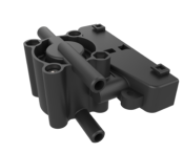
Overview
Dolphin Fluidics' On/Off valves are 2-way medium-separated, normally closed valves designed for dispensing and mixing. Characterized by their efficiency and compact design, these valves are optimal for applications demanding high cleanliness and precise flow control.
Advantages
- Lightweight and compact, offering significant space and weight advantages.
- Low power consumption and noiseless operation, enhancing system efficiency and user comfort.
- Patented design with NSF/FDA material compliance, suitable for health tech and food & beverage industries.
Single Channel Valves
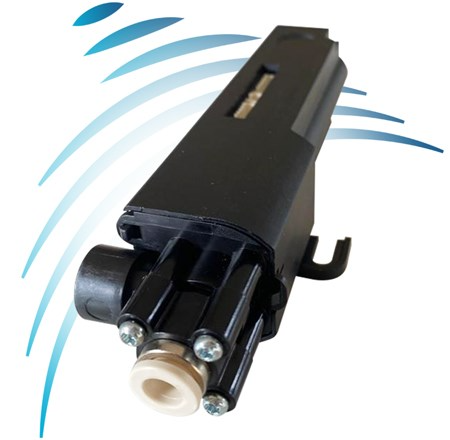
Overview
These are digital, 2-way, full-separation smart valves with on/off and proportional closed-loop control, ideal for dosing or dispensing fluids accurately.
Advantages
- Provide accurate dosing without drift, crucial for consistent application performance.
- Customizable to meet stringent functional requirements, ensuring reliability across various industrial applications.
Dual Channel Valves
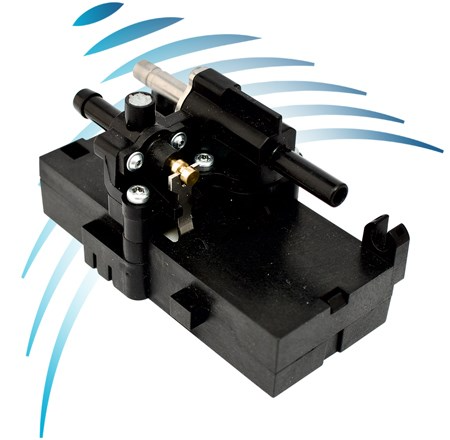
Overview
Dolphin Fluidics' dual-channel valves feature two independently controlled channels, making them perfect for tasks requiring the simultaneous handling of different fluids.
Advantages
- Allows for compact system design by reducing space, weight, and wiring requirements.
- Digital controls facilitate easy integration with IoT systems for enhanced data management and remote diagnostics.
Digisense valve
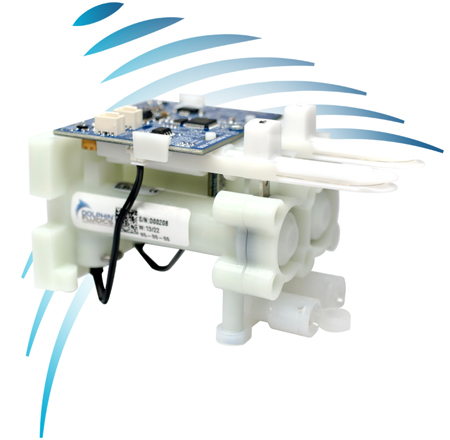
Overview
The Digisense Valve from Dolphin Fluidics is a state-of-the-art solution designed for precision fluid management. This dual-channel valve incorporates integrated temperature probes and flowmeters within each channel, enabling highly accurate fluid regulation and dosing. Its architecture supports precise mixing of two different liquids by controlling the outlet temperature, making it ideal for applications that require exact fluid properties. The Digisense is an all-in-one unit that does not require external components for operation, simplifying system integration and enhancing reliability.
Advantages
- Features two independent channels with built-in temperature and flow monitoring for closed-loop control.
- Facilitates precise fluid mixing and dosing with different viscosities.
- Operates with very low power consumption, significantly lower than traditional valves, and silently.
- Offers customization options to meet specific electronic and mechanical interface requirements of various applications.
Digimed valve
Overview
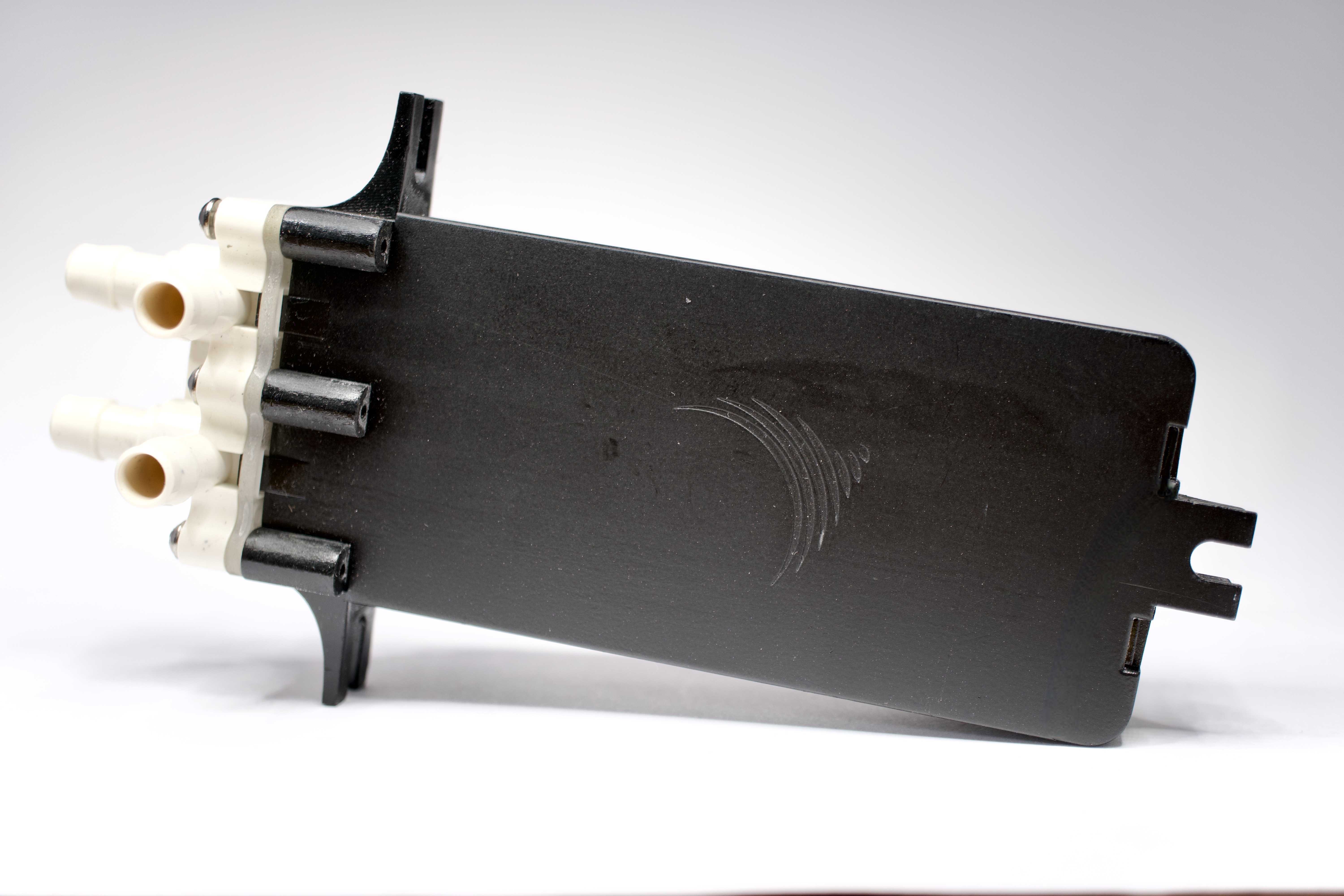
The Digimed Valve is tailored specifically for the healthcare sector, ensuring all materials used meet the ISO10993 standards necessary for medical applications. This dual-channel valve allows for independent proportional control of liquids, air, or gas, providing flexibility and precision necessary for medical devices. Like the Digisense, it integrates easily with external sensors for accurate fluid dynamic control and supports closed-loop operations.
Advantages
- Dual-channel design allows for separate control of air, gas, and liquids, suitable for diverse healthcare applications.
- Ensures safe use in medical environments with all materials conforming to ISO10993.
- Low energy consumption and silent functionality enhance its suitability for sensitive medical settings.
- Customizable interface options to accommodate specific requirements for medical device integration.
How to choose a metering valve
Start from the requirements of your system. These are the questions to answer before selecting metering valves for an OEM device:
- Which media? Air, gas, steam, water or other liquids, and whether you need to handle two fluids at once.
- Which pressure range? Consider the full pressure difference across the valve in every operating condition.
- How much flow? Check the flow coefficient against the minimum and maximum flow rates you need.
- On/off or proportional? Dispensing a fixed dose and modulating a continuous flow call for different control modes.
- Which interface? Analog, PWM, RS-485 or I2C, depending on the architecture of your host system.
- Which materials and standards? For example, ISO 10993 for medical devices or food-contact materials for beverage applications.
- How much space and power? Weight, footprint and energy budget matter in portable and battery-powered devices.
If no standard model matches every requirement, Dolphin can customize fluidic ports, connectors, pressure range, control algorithm and materials. Send us your requirements and we will check them against the standard range or a custom configuration.
The impact of metering valves across industries
Metering valves are indispensable tools in industries requiring high precision in fluid control. Dolphin Fluidics offers a range of metering valves that cater to diverse industrial needs, ensuring efficiency, reliability, and precision. By understanding the specific advantages and applications of these valves, industries can significantly enhance their processes and product quality.
Find the right metering valve for your system
If your next device needs precise dosing, the valve you choose affects both accuracy and power budget. Dolphin metering valves combine SMA actuation with closed-loop control on board and use up to 20 times less power than conventional solenoid valves.
If you need more information about which metering valve is most suitable for your industry, contact our team
Contact us for further informationContact request
Thank you for your interest Error processing your request. Please retry or contact us.