
)
- Homepage
- /
- Proportional valve vs solenoid valve: engineering precision in fluidic systems
Proportional valve vs solenoid valve: engineering precision in fluidic systems
When designing high-performance fluidic circuits, the choice between a standard solenoid valve and a proportional valve is not merely a component selection—it is a decision that dictates the granularity of your control, the reliability of your output, and the data-driven potential of your entire system. If you are struggling with the limitations of on/off control in applications that demand nuanced dosing, mixing, or pressure regulation, you are likely hitting the performance ceiling of conventional solenoid technology.
In this analysis, we deconstruct the core differences between these technologies, helping you determine when to stick to binary operations and when to transition to intelligent, proportional control to meet modern engineering standards.
Read:
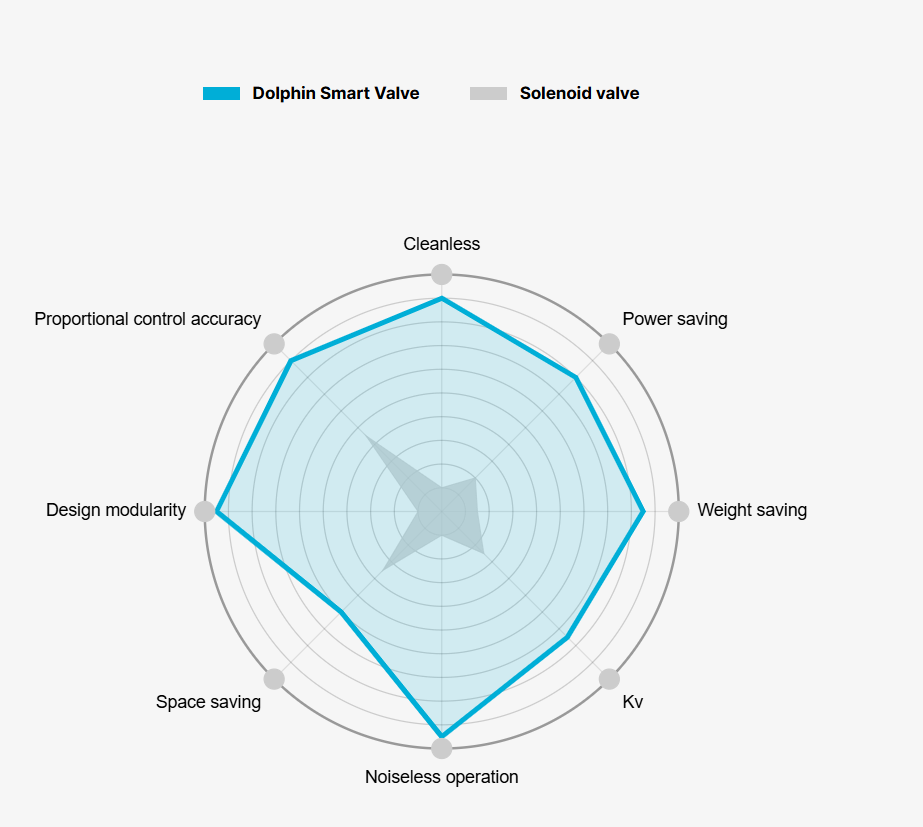
The fundamental divide: binary vs. continuous control
At the core of the debate, the solenoid valve is a binary device. It is designed for two states: open or closed. While incredibly reliable for simple routing, filling, or on/off safety applications, it falls short when your process requires a specific flow rate or a dynamic pressure gradient.
Limitations of on/off solenoids
- Inelasticity: You cannot "throttle" a standard solenoid valve. Attempting to do so via PWM (Pulse Width Modulation) often leads to mechanical wear, noise, and inconsistent fluid delivery.
- Lack of feedback: Most standard solenoids are "blind" components. They execute a command without providing status, pressure, or flow diagnostics.
- Pressure surges: Rapid switching can induce water hammer effects, potentially damaging sensitive downstream components.
The proportional valve advantage
Conversely, proportional solenoid valves are engineered to modulate their opening position—and thus the flow rate or pressure—in direct correlation with an input signal. By utilizing a continuous range of motion, these valves transform fluidic control from a blunt tool into a high-precision instrument.
Technical comparison: proportional valve vs solenoid valve
For an engineer, the choice depends on the physics of the application. If your target is repeatability and the ability to adjust parameters on the fly, the proportional valve becomes the superior choice.
| Feature | Standard solenoid valve | Proportional valve |
| States | Binary (Open/Closed) | Continuous/Variable |
| Control | None (Digital) | Analog or PWM/Digital Input |
| Flow precision | Low (On/Off only) | High (Granular) |
| Intelligence | Minimal | High (Embedded electronics/Feedback) |
| Best for | Routing, simple draining | Dosing, mixing, dynamic pressure |
While standard valves rely on simple coils, high-end proportional valves (especially those integrated with smart actuators) leverage internal electronics to compensate for hysteresis, temperature shifts, and fluid viscosity changes, ensuring that the commanded flow is the actual flow.
Cost and maintenance
At first glance, standard solenoid valves may appear more cost-effective due to their lower initial purchase price and simpler construction. However, this advantage often diminishes over time. Their binary operation leads to higher mechanical stress, more frequent cycling, and reduced lifespan in dynamic applications, increasing maintenance frequency and downtime.
Proportional valves, while representing a higher upfront investment, deliver a significantly lower total cost of ownership. Their ability to modulate flow smoothly reduces wear on internal components, minimizes pressure shocks, and improves overall system efficiency. Additionally, advanced models with integrated electronics and feedback loops enable predictive maintenance, reducing unplanned interventions. In applications where precision, stability, and long-term reliability are critical, proportional valves are not just a performance upgrade—they are a strategic economic choice.
When to transition to proportional control
If you are currently relying on standard solenoids but facing persistent pain points, it is time to evaluate a shift. Consider these scenarios:
- Dynamic dosing requirements: If your process needs to mix liquids in varying ratios, a single proportional valve can replace complex manifold arrays of on/off valves.
- Miniaturization: Space is often at a premium in modern instrumentation. Intelligent proportional valves often combine the valve and the controller in a compact, smart-actuator footprint.
- Data-centric workflows: If your goal is Industry 4.0 readiness, you need sensors and actuators that communicate. Digital proportional valves provide real-time diagnostics, allowing for predictive maintenance and closed-loop process monitoring.
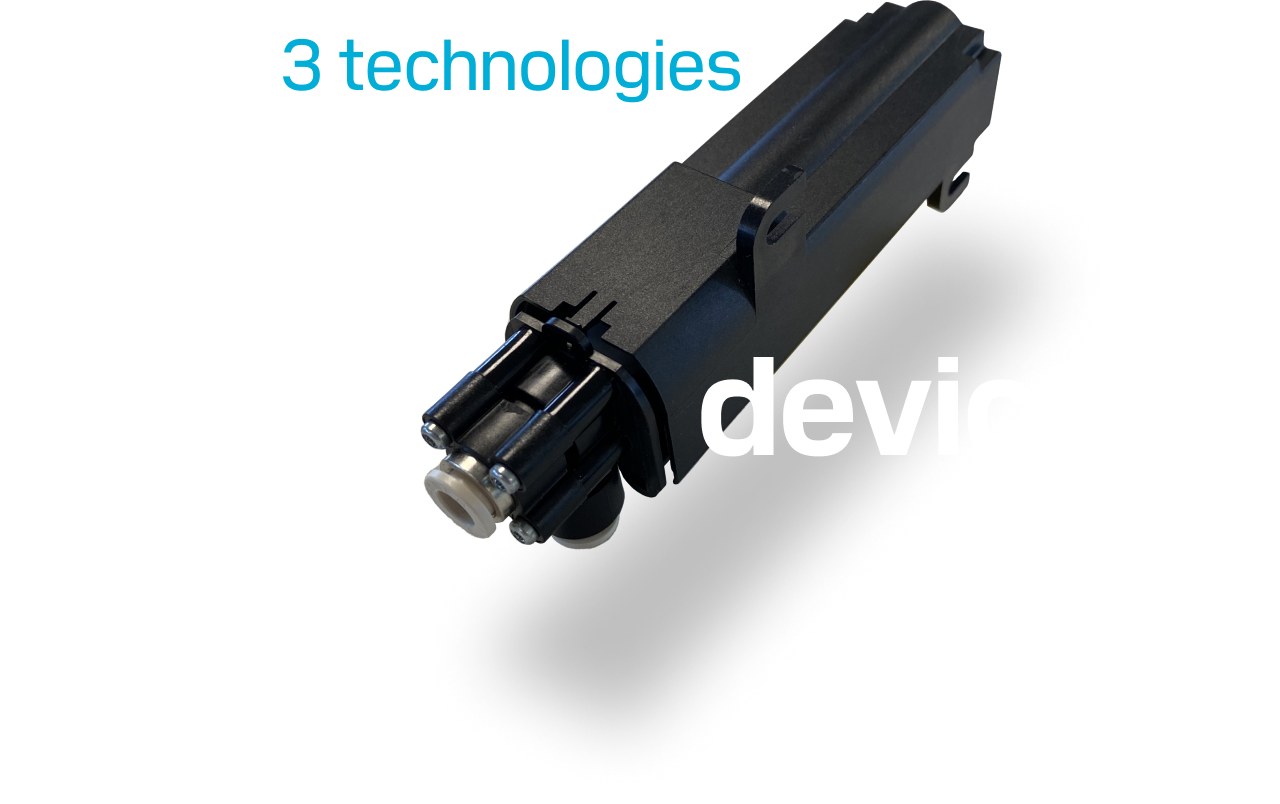
Bridging the gap: the role of embedded intelligence
Modern proportional valves have evolved. At Dolphin Fluidics, we look beyond the mechanical orifice. By integrating embedded electronics, we allow the valve to "understand" the fluidic environment. This moves the complexity from your PLC (Programmable Logic Controller) software into the component itself, simplifying integration and reducing the Total Cost of Ownership (TCO).
Are you looking to optimize your fluidic architecture? Contact our engineering team to discuss how digital proportional technology can replace cumbersome, low-precision solenoid setups.
CONTACT US
Frequently asked questions (FAQ)
Is a proportional valve just a solenoid valve running PWM?
While some proportional valves are driven by high-frequency PWM, the mechanical design differs significantly. A proportional valve features a balanced armature and specific spring characteristics that allow for linear, smooth positioning, whereas a standard solenoid valve is designed for snap-action and holding force, not precision throttling.
Does a proportional valve require more complex controls?
Yes and no. While it requires an analog or digital signal to determine the setpoint, modern smart proportional valves include embedded drivers that handle the current control internally, making them easier to integrate into your software environment than DIY-throttled solenoids.
How does the TCO compare between these two?
Initially, a proportional valve has a higher unit cost. However, the TCO is often lower in complex systems because you reduce the number of required valves, eliminate the need for external pressure regulators, and gain diagnostic data that prevents costly downtime.
Can proportional valves handle high pressure?
Yes, but it depends on the design. Proportional valves are available for various pressure ratings. The key is to match the valve's force-balance profile to your specific system pressure to ensure steady-state stability.
Contact request
Thank you for your interest Error processing your request. Please retry or contact us.